Overview
News first began to leak of Jimbo Fisher’s interest in moving from Florida State to Texas A&M late in the 2017 football season. At that time, Texas A&m had endured its second long season of mixed success in Noel Mazzone’s spread system and a few years of ‘wonder-boy’ Jake Spavital building and discovering his own personal flavor of a spread football. As rumors swirled of Jimbo’s supposed interest in moving from Tallahassee to Aggieland, the concept and idea of a team sporting the Maroon and White returning to ‘traditional’ formations, schemes and play designs excited many, and rightfully so. Offensive football under Kevin Sumlin post Johnny Manziel was at times exciting, but more often dull, predictable and played-out. A change was welcome. A change was required. And change is what we got.
These changes were realized early. Seeking and receiving pledges from two tight ends including Juco transfer Jace Sternberger and Arizona graduate transfer Trevor Wood provided Jimbo with plug-and-play talent at the previously overlooked and underutilized position. The move from Linebacker to Fullback for fan favorite and beloved 12th Man Cullen Gillaspia rounded out the requisite changes and additions for the offense to implement plays with one tight end and two backs in the backfield. In football nomenclature, this is commonly referred to as ’21’ personnel. Collectively, Wood, Sternberger and Gillaspia formed a trio that would help pave the way for Trayveon Williams to rush for 1,760 yards and 18 TD’s and receive 1st Team All SEC and 2nd Team AP All American honors.
And just like that, they were gone.
Williams and Gillaspia were drafted by NFL squads while Trevor Wood signed an Undrafted Free Agent contract with the Pittsburgh Steelers. As fall camp has started, conversation has swirled about who would be starting at each of the open positions. At the Tight End position, Glenn Beal is entering his Sophomore campaign while highly touted freshman Jalen Wydermyer and Baylor Cupp will push Beal for playing time. Fullback is a huge question mark after Ben Miles informed the staff he would be transferring to play with his dad and older brother at Kansas.
At the conclusion of my study I wanted to answer the following questions:
- How often was ‘21’ utilized and what role does this package play in Jimbo Fisher’s offensive attack?
- Which rushing plays were the most and least effective?
- Considering two Tight Ends, one Fullback and one Running Back departed to the NFL, should ‘21’ personnel be utilized in the 2019 campaign?
- If so, what plays and concepts are and are not candidates for the 2019 Aggie Rushing Attack?
To best answer the above questions, I reviewed the film to identify rushing attempts executed out of traditional 2 Running Back, 1 Tight End sets to pick up. Please note: I included all plays that featured both:
- Plays where a FB was in the game with a RB AND
- When 2 RB’s where in the game
Initial Observations
I was successful in locating game footage for Clemson, all SEC opponents except Mississippi State and the bowl game vs. NC State. I reviewed each game to identify and then chart all plays that featured two backs in the backfield and one tight end. During the charting process, I captured Down and Distance, hash mark, yard line, Formation, any motion and the actual play called.
I will attempt to analyze and appreciate the data from a number of different vantage points one at a time as opposed to dropping an excel spreadsheet with filters here.
Below is an overview of the #of plays in 21 personnel in each of the 9 games analyzed

Average: 7 plays per game
Median: 7 plays per game
**Please note: I removed 4 garbage time running plays from the end of the bowl game vs. NC State from the population to better appreciate the data as a whole.
Working with strictly the running plays from here on out, the table below describes how often a running play was called in 21 personnel for each down.

Equally as valuable is which quarter the plays were called. An even spread would indicate a commitment to not only this package, but potentially to running the ball as well.

Were plays more or less successful in Pistol, Shotgun or Under Center? I thought you’d never ask.

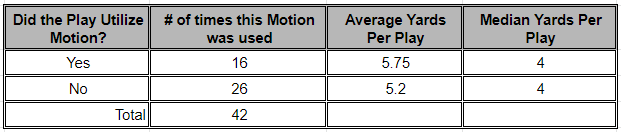
Motion? I got you fam.
Film Room Overview
Perhaps the most interesting angle to look at would be based on the type of running play executed. Below is a table subdividing the 42 running plays into the play that was called in addition to the average net gain/loss for these sub types and median net gain/loss.
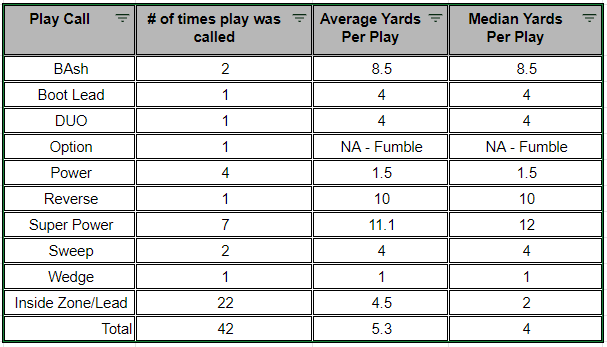
And now, the fun really begins. From this point forward, I’ve captured each play type in the above table and provided the following:
- A definition of each play
- When possible and appropriate, I provided a non Aggie Football related video or article that could help in understanding the play in more detail
- For BAsh and DUO, I also provided a sample play from this season
Zone BAsh (Back Away)
A split flow/2 for 1 running play run out of the shotgun that features the offensive line blocking one one direction while the backfield flows outside zone in the opposite direction. This could be considered a ‘run-run option’ with the Quarterback reading either the Defensive End or Mike Backer.

In the above BAsh play vs, LSU, you can see the Offensive Line flow left while the backs flow heavy to the right. Corbin takes a wide angle outside to find the playside safety while Rogers blocks down on the Apex defender and Williams outruns the conflict Linebacker to the edge for a substantial gain early in the matchup.
Below is a cutup of other varieties of Bash
Boot Counter
A designed QB run concept that is executed under center and is designed to look like play-action boot pass, but in all actuality is designed to get the QB outside in space with a puller in front of him. The receivers are not running routes and instead are blocking downfield.
- Fun note: this was the same play called vs. Kentucky that resulted in a fumble, scoop and score, but that version was run out of 22 personnel (2 backs, 2 tight ends)
DUO
A gap scheme that features the running back attacking the ‘A’ gap on either side of the center and the frontside Offensive Lineman all blocking down towards the center and away from the Running Back’s trajectory. On the surface, DUO looks like inside zone, but again, the offensive line is gap blocking the opposite direction of the back and not in the same direction like zone. Another common way to describe DUO is ‘Power without pulling the backside guard’.
The read for the Running Back is simple: wherever the MLB goes, go the opposite direction. In addition to the one play called out of 21 personnel, DUO was also a main feature for A&M in 2018 operating in 11 personnel in the pistol and has also gained a tremendous amount of popularity in the NFL particularly with the Rams and Saints, among others.

Load Option
A QB-RB option scheme that includes a FB leading the path outside and also typically leaves the end man on the line of scrimmage (EMLOS) unblocked. The QB’s job is to attack the EMLOS and either keep the ball and turn upfield if this player commits to the pitch man, or if the EMLOS commits to the QB he pitches to the RB to get outside and upfield
Fun fact: Additional Note: the sole time A&M ran this play they fumbled vs. Auburn
Power
A gap blocking scheme that features the playside or ‘frontside’ blocking down towards the center, the center blocking back (opposite the direction of the Running Backs trajectory) on the 0, 1, 2 or 3 technique and the backside guard (BSG) pulling onto the play-side line backer (PSLB) in addition to the FB kicking out the frontside defensive end/EMLOS.
Although the play is not heading his direction, the back-side-tackle’s job is still important as he needs to close the space no longer occupied by the pulling guard an executes a ‘Zone Hinge’
Sweep
Sweeps can be executed in a variety of alignments. A&M’s featured a RB on both sides of Mond in the shotgun and each back taking wide attacking points while the Offensive Lineman and tight ends executed wide reach block steps with the goal to reach the playside shoulder of the nearest defender in the playside gap
- Additional Notes: Both Sweep plays run were in 1st and 10
Reverse
A&M’s version was based out of the shotgun and was designed to look like sweep before the ball carrier pitches the ball back to the slot receiver running the opposite direction of the ball carrier
Wedge
This was A&M’s go to play when needing just 1 yard and was typically executed in 12 personnel with both Tight Ends off the LOS on the tackle’s hip. The Lineman’s splits are reduced to practically zero (foot-to-foot) and Mond is tasked with finding a crease and falling forward while Williams who is aligned 3.5ish yards behind pushes him forward.
They were very effective executing ‘Wedge’ when they needing just 1 yard.
Super Power
The Most successful running play in 21 personnel was ‘Super Power’. Some coaches refer to this play as ‘Counter BoS’ (Back on Safety), Coach Harbaugh and Michigan call it ‘Power Bonus’ while the legendary Coach Joe Gibbs refers to this play as ‘Counter Load’. The objectives of the play are:
- Down block playside and manipulate the offensive front to move 3 additional players frontside as pullers or lead blockers responsible for the:
- End man on the line of scrimmage (EMLOS)
- The Playside LB (PSLB) and
- Either the playside safety or MLB who is typically filling the gap and preventing a large gain
The three players pulling or leading the way in Jimbo’s variety are the Backside Guard (BSG), Tight End, and the Playside Running Back/Fullback. It is challenging to assign specific blockers specific defenders to block and write these rules in stone due to the unpredictable nature of defensive players alignment and assigned run fits. As a general rule of thumb, the BSG, TE and FB are collectively responsible for the EMLOS, PSLP and playside safety if in a 2 high shell or one of the ISLB’s if in a 1 high shell.
Thanks again to @FB_FilmAnalysis for the video
Jimbo & Company executed their variety of Super Power out of the shotgun with a Running Back or Fullback on both sides of Mond and the Tight End in a ‘Y-Off’ alignment. ‘Y-Off’ just means the Tight End is not on the LOS but instead 2 yards or so off the ball. This alignment creates an uninterrupted path for the Tight End to get around the line and up the field. The Running Back takes a ‘counter step’ away from the play before coming back in front of the QB to receive the ball. He has to remain patient and allow his blockers time to wrap around onto their assigned defenders before either planting their outside foot and getting upfield, or quickly accelerating around the edge to the sideline.
Final point: the angle of the handoff allows the QB to read the backside defenders just like zone read, so he has the opportunity to keep the ball and head upfield if he sees the defenders ‘fast flowing’ towards the would be ball carrier.
Here are the seven times A&M ran Super Power last year starting with Arkansas

- Mond does a good job of identifying the safety blitzing and handing the ball off
- The BSG does a good job walling off the EMLOS and crashing him down into the pile
- Gillaspia takes a wide angle that leads to him nearly overrunning the play before suddenly turning inside to pick up the flowing Mike
- Sternberger moves into the hole quickly and ends up taking

- Dan Moore Jr. tries to fight through some traffic downblocking to the Mike Backer, but allows him to get outside and he Mike ends up making the play
- Sternberger again moves across and up the hole well, but executed a poor cut block. The Arkansas defender plays it well and combines with the LB Dan Moore Jr. was trying to block and made the play
- You can see at the very end of the clip: it appears Gillaspia struggled with the safety late allowing him to spill outside and help cleanup the play
The plays against Auburn featured 2 RB’s as Gillaspia was sidelined while the new backfield featured Corbin as the ball carrier and Williams as the lead blocking back. Personally, I can’t help but to wonder if the coaching staff was left unsatisfied with Gillaspia’s execution against Arkansas and showcased in the first 2 clips

- Sternberger and the BSG both pull with good speed and momentum to attack the EMLOS. Sternberger makes a great split-second decision to keep the pile moving outside while running through the EMLOS with his outside hand free and available to take on an additional defender
- Trayveon Williams attacks the first man outside with aggression and force before executing a clean and effective cut block which allowed Corbin to continue outside and gain significant yardage
- Quartney Davis outside runs off his man and continues to engage downfield in some chicken fighting
- Corbin displays good patience allowing his blockers to get out in front and lead the charge and quickly accelerates around the corner and up the field

- This play was executed exactly how you draw it up on the chalk board. BSG pulls and identifies EMLOS, TE pulls and leads on PSLB and RB finds and leads onto safety spinning down and outside. All three did a great job
- Playside guard could have executed a better block on the MLB who quickly shed the block and ended up to making the tackle on Corbin
- When Corbin gets the ball he attacks outside before reading Sternberger’s block, planting with his outside foot and turning up field with a burst. Good read by him to quickly get north and south

- The EMLOS recognized the play early and did a great job squeezed down and attacked the vacated space left by the PST well in addition to attacking the BSG (McCollum) and driving him into the backfield
- Considering the EMLOS penetrated the backfield well and drove the BSG back into the backfield, it’s now up to the Tight End pulling around to maneuver around the pile and attack the first man he sees. That’s exactly what Sternberger does
- Williams again does a good job executing a cut block on the first man he sees outside and you can appreciate how patient he is getting to his spot and lining his man up. Great job here by him.
- After receiving the ball, Corbin follows Sternberger’s path around McCollum and again shows good patience allowing his blocks to develop in front before accelerating upfield
The two plays vs. South Carolina featured both WR’s and the Tight End aligned to the field. Since the Tight End is lined up off the LOS, both WR’s are lined up ON the LOS which makes the WR aligned in the slot an ineligible receiver. The counter play is executed back into the boundary/away from the WR’s in both plays.

Mond makes a tremendous read here quickly identifying the heavy pursuit angle of the BSDE. He makes the correct decision to keep the ball and head upfield, sliding behind the block by Davis and making the Free Safety miss before falling forward for an additional few yards

This was executed similarly to the 2nd play vs. Auburn however it appears their was some disconnect in assignments between Tight End Trevor Wood and Gillaspia. Fortunately, Williams decided to simply run around the confusion and hysteria and get to the sideline hashes and upfield for a significant gain
Not Good!
The least successful play from my study was Inisde Zone Lead which features the Offensive Lineman zone blocking across the board (except for the BST who can either pass set his man or execute a turn-out-block to prevent him from crashing inside) and, depending on the defensive front, work double teams on the Defensive Lineman on their way to the 2nd level defenders while the Fullback is typically responsible for leading onto the Playside or Middle Line Backer. As simplistic as this sounds, the steps by the offensive lineman vary a great deal compared to outside or wide zone.
As ‘Table 7’ describes, I charted 22 instances of Inside Zone Lead averaging a pedestrian 4.5 yards per play however the median was only 2 yards per play and does a much better job of describing the true success rate of Zone Lead in 21 personnel in this study. The average was inflated a significant amount due to Trayveon’s 38 yard TD run in the 2nd quarter vs. Auburn and a 17 yard run earlier in the same game. Removing these two runs cuts the average gain by more than half to less than 2 yards per carry.
Below is, in my opinion, the worst play call of the 2018 Aggie Football season and 1 of 10(!) Inside Zone Lead plays I charted that gained 1 yard or less. After having all week to prepare, scheme and script an opening series against the #1 team in the country coached by one of the best defensive coaches of all time who, among a number of creative and sophisticated concepts, loves to spin an 8th defender in the box ESPECIALLY on running downs, and if that isn’t enough, with a young, inexperienced Offensive Line on the road you decide the best way to start this game is…
A static Inside Zone play off the right side out of a Pro Set. Christ…

n the clip above you can see the safety spinning down late and eventually securing the tackle after the line generated zero push up front. You can see Sternberger struggling at the top of the screen late in the play.
The only two plays that gained more than 8 yards were the two rushes Trayveon had against Auburn I described above. Both plays shared the same characteristics below and varied from the vanilla approach run against Alabama in the clip above by:
- Inserting Trevor Wood at Tight End instead of Sternberger
- Placing Gillaspia directly behind Mond as opposed to offset towards the Tight End
- Aligning the two receivers and Wood in his typical 3 point stance and on the LOS to the field which creates a ‘Y-Over Trips’ look
- Rogers is lined up on the ball with Quartney Davis just outside of him and off the line
- Mond motions QD back into the formation and for a split second, it looks like they could be running a quick handoff or ‘jet sweep’ to QD back to the boundary before he turns into the backfield at the snap of the ball to fake the reverse post handoff
- The backside EMLOS is purposely left unblocked due to the reverse action generated that should hold him in place


Conclusions
I set forth the questions I was seeking to answer, so let’s revisit them one at a time:
- How often was ‘21’ utilized and what role does this package play in Jimbo Fisher’s offensive attack?
- The use of 21 personnel is not a mainstay or large part of the Aggie offensive attack and accounted for an estimated 10% of the overall plays called.
- The 2018 Aggie Offense ran the football twice as often as they threw the football out of 21 personnel.
- Side note: the use of 21 personnel in the NFL has plummeted to half its use from 2010 to 2018 and reached 9 year low of 8% of total play calls in 2018. I found it interesting Jimbo is about on pace with this recent trend

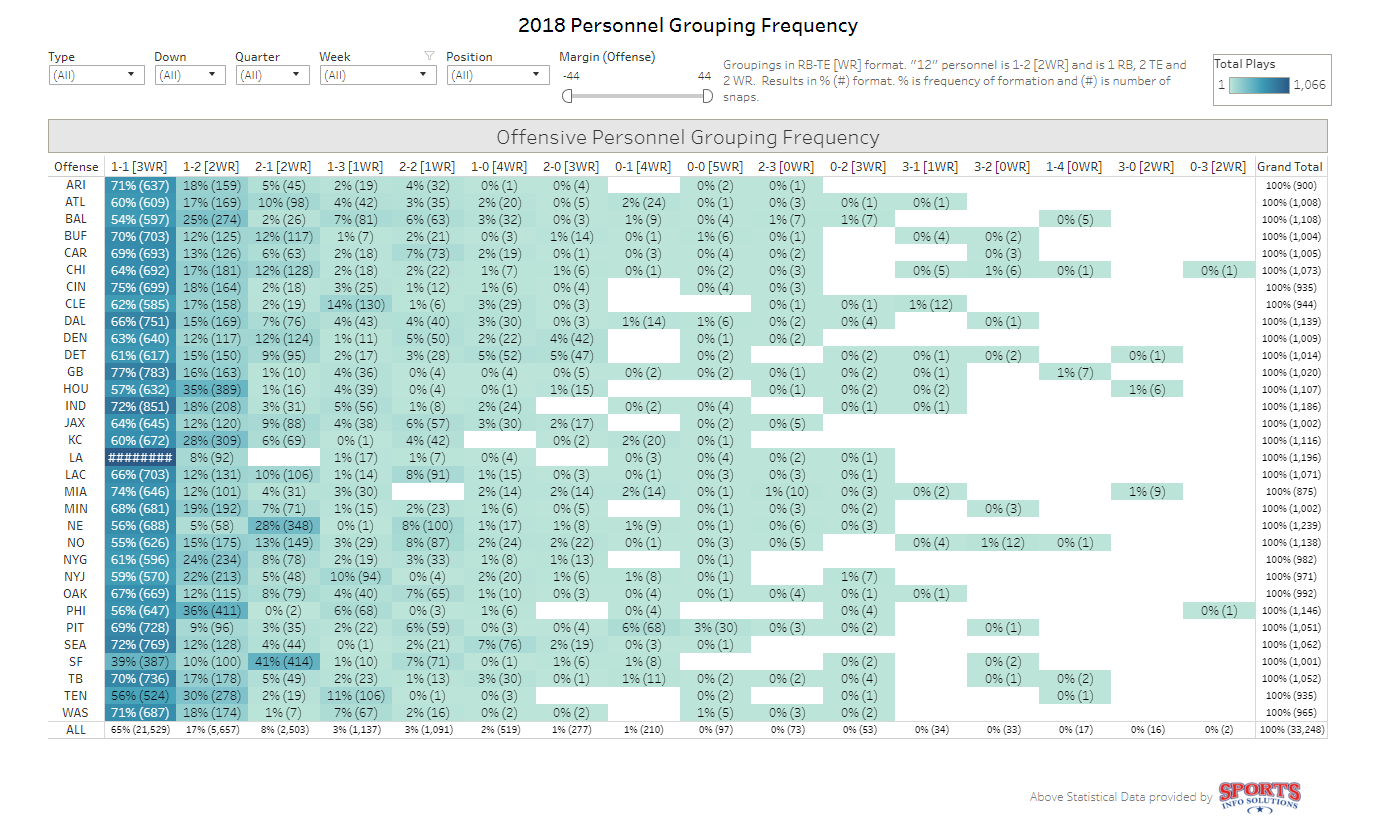
Note: Although LA’s frequency is not populated in the table above, they operated 89% of their offensive snaps out of ’11’ personnel
- The coaching staff was committed to its deployment throughout the year regardless of the opponent faced and stayed consistent in its deployment throughout the course of the game
- The offense gained more ground operating out of the shotgun and motioning around players before the snap
2. Which rushing plays were the most and least effective?
- Super Power was far and away the most effective running play averaging over 11 yards per play
- Inside Zone Lead was the least effective running play with nearly two dozen attempts and a median gain of only 2 yards per play
3. What plays and concepts are and are not candidates for the 2019 Aggie Rushing Attack?
- Plays I would like to see called this fall:
- BAsh – could be extremely effective even without a Fullback
- Super Counter – too much success to never see this again
- Sweep – simple way to get outside
- Reverse – simple way to keep backside defenders from flowing too fast down the line and will help with RB’s finding cutback lanes
- Wedge – needs to stay the go-to play for when you need only a yard
- Power and Inside Zone Lead only if motion or creative formations are utilized
- Plays I would not like to see called this fall:
- Boot Counter
- Load Option
- Boring/Vanilla flavors of Power and Inside Zone that do nothing to provide easier blocking angles for the Offensive Lineman or force Running Backs to find and create space themselves
4. Considering two Tight Ends, one Fullback and one Running Back departed to the NFL, should ‘21’ personnel be utilized in the 2019 campaign?
- Yes, however I would limit its implementation to feature two RB’s more than a RB and a FB and ensure motion and formations are creative in nature to force defenses to align a number of different ways before and after the snap to help create running lanes for the backs
Thanks for reading. Y’all come back soon to see what Elko was cooking up all last year. I will try and have another long-form article out in a similar format in a few weeks.
TF
 The Aggie Rundown